
How do LLMs decide which brands to recommend?
Not by ranking. A model has to resolve who you are, retrieve something the web says about you, carry your name into the draft, and then decide to endorse you rather than mention you as the option it passed over. Four different failures, four different fixes.

Ask ChatGPT which observability tool a 200-person US software company should buy and you will get three names and a sentence of reasoning about each. There is no page two. Marketing teams read that output as a leaderboard and assume the fix is to rank higher. It is not a leaderboard. It is the last two seconds of a pipeline that already threw most of the market away.
The most useful public description of that pipeline comes from a 2026 audit of roughly 37,000 production runs across four model configurations, 215 commercial prompts and 19 sectors. The authors frame the brand’s problem as a three-stage funnel: the model must retrieve a page referencing the brand, carry the brand into the generated answer, then specifically endorse it rather than name it in passing as the alternative not picked. Any stage can fail, and each failure needs different work.
That framing matters because it kills the single most common assumption in US marketing budgets right now — that AI visibility is a discoverability problem you solve with more content.
Stage one: resolution and retrieval
Before anything is retrieved, the model has to work out what the buyer means and which companies plausibly belong in the category. Ambiguity is fatal here and it is usually self-inflicted: a company name that is also a common noun, a product that launched under a different name in 2024, a founder whose title differs between LinkedIn and the about page, a description that calls the company a “platform” on one profile and an “agency” on another. The model does not penalise you for this. It simply becomes more confident about someone else.
Then the system issues searches and pulls a handful of authoritative-looking pages. This is where smaller brands die. In the 37,000-run audit, category leaders appeared in nearly every relevant retrieval, while specialist and regional players in the bottom two prominence tiers never surfaced at all in 48–52% of runs. Not ranked low. Absent.
Stage two: carry-through, and the incumbency tax
Models also carry priors from training. A controlled 2026 experiment on skincare — a category where buyers cannot judge quality before purchase — found that when every product had identical specifications, well-known brands were recommended 100% of the time. That is the bleak headline. The more useful finding is the second one: the monopoly collapsed with a rating advantage as small as 0.1 stars for a competitor.
Read that as a strategy note. Fame is the default tiebreaker, but it is only a tiebreaker. Any concrete, verifiable, third-party differentiator — a rating, a benchmark, a named customer, a documented result — outweighs it. The same paper found that authority-flavoured marketing language shifts recommendations too, including, uncomfortably, fabricated clinical claims. Which is a reminder that these systems are credulous about form and that evidence you can actually stand behind is the only version of this worth building.
There is a competitive trap attached. When every brand in a category runs the same generative-engine-optimization playbook, the paper models individual payoff falling almost to zero — while brands that opt out receive nothing at all. Participation stops being an edge and becomes table stakes. Late is expensive; identical is worthless.
Stage three: endorsement, where the persona decides
Getting into the retrieval pool is not the same as getting recommended. The audit found category leaders convert only 25–41% of the retrievals they reach into an actual recommendation slot, while second-tier challengers convert best of any group at 37–52% — but lose slots to persona-mediated substitution, where the buyer described in the prompt causes the model to swap in a different name. Mid-market brands sit at the inflection point: coverage falls, conversion falls, and persona effects peak.
The practical translation is that the leverage point depends on where you already sit. If you are the known leader, your problem is differentiation, not visibility — the model can see you and chooses someone else. If you are a challenger, your problem is qualification: making explicit which buyer you are right for, so the persona in the prompt selects you rather than routes around you. If you are a specialist, your problem is existence — you need to be named on sources the engine already retrieves before any of the later work matters.
One more wrinkle worth knowing: a September 2026 paper found that repeatedly asking the same commercial question exhausts an LLM’s pool of brand names long before it exhausts the sources it draws on — recommendations saturate while citations keep varying. Practically: the set of brands a model is willing to name in a category is narrower than the set of pages it will read. Being cited is necessary. It is not sufficient.
What actually moves the answer
Consistency before content
One canonical description, one category noun, one product spelling, one title per executive — identical on your site, LinkedIn, Crunchbase, G2 and every press mention. Contradiction is the cheapest way to lose the resolution step, and it costs nothing but an afternoon to fix.
Earned sources over owned pages
Models assemble answers from places they already trust: review platforms, comparison write-ups, practitioner posts, forums, trade press, documentation. Forty posts on your own blog is volume. The same claim, in compatible language, on five sources the engine already cites is corroboration. Only the second changes the output.
State your constraints in writing
Prompts are conditional now — company size, industry, integrations, budget floor, compliance. Pages that name those conditions plainly, including what you are bad at, hand the model the exact clause it needs to justify picking you for that persona. Vagueness is uncitable.
Measure answers, not indices
Answers vary by phrasing, account and day. A rising “visibility score” proves nothing. A log of prompt, engine, date, verbatim answer and cited URLs proves something. If a vendor cannot produce that trail, they are reporting on their own effort.
Who does this work in the US
Four firms US teams are actually shortlisting, with each homepage as captured in September 2026. Positioning and pricing come from public pages; none of them reviewed this piece.
LLM Recommend
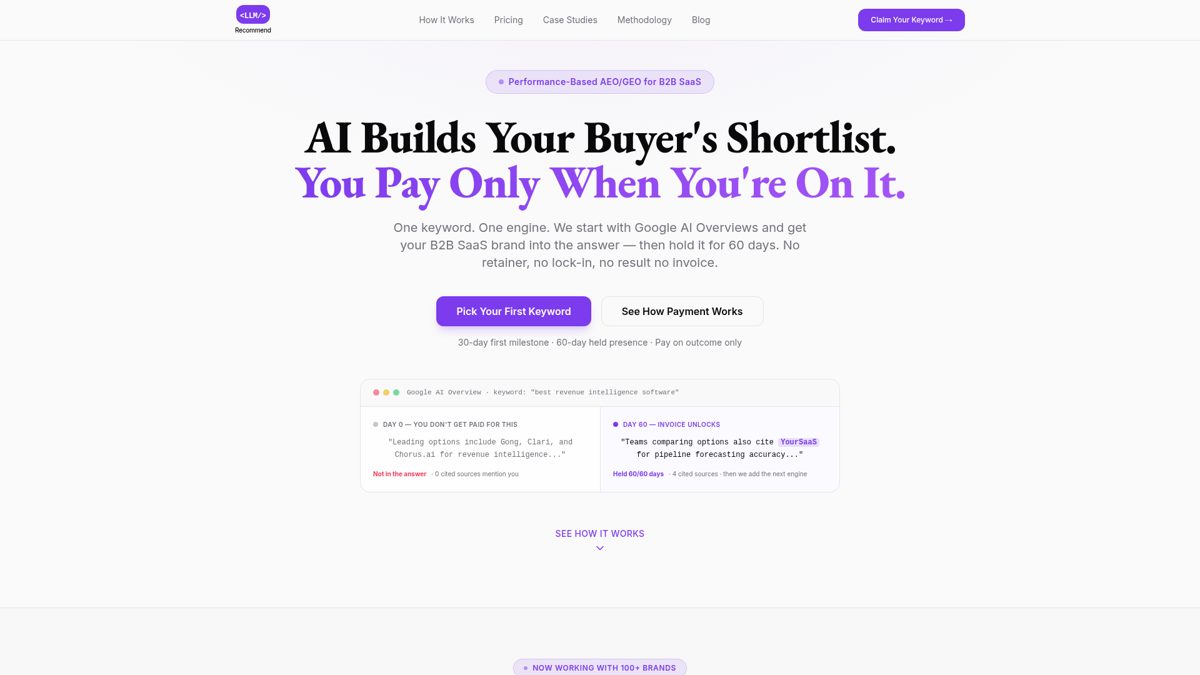
Built around the single question of whether a brand is named in an answer, rather than around content volume. Work is scoped to specific buyer prompts on specific engines, and reporting is the answer text itself — the prompt, the model, the date, the verbatim response and the URLs it cited. Disclosure: this is our own brand, so treat it as a position, not a neutral rating.
iPullRank
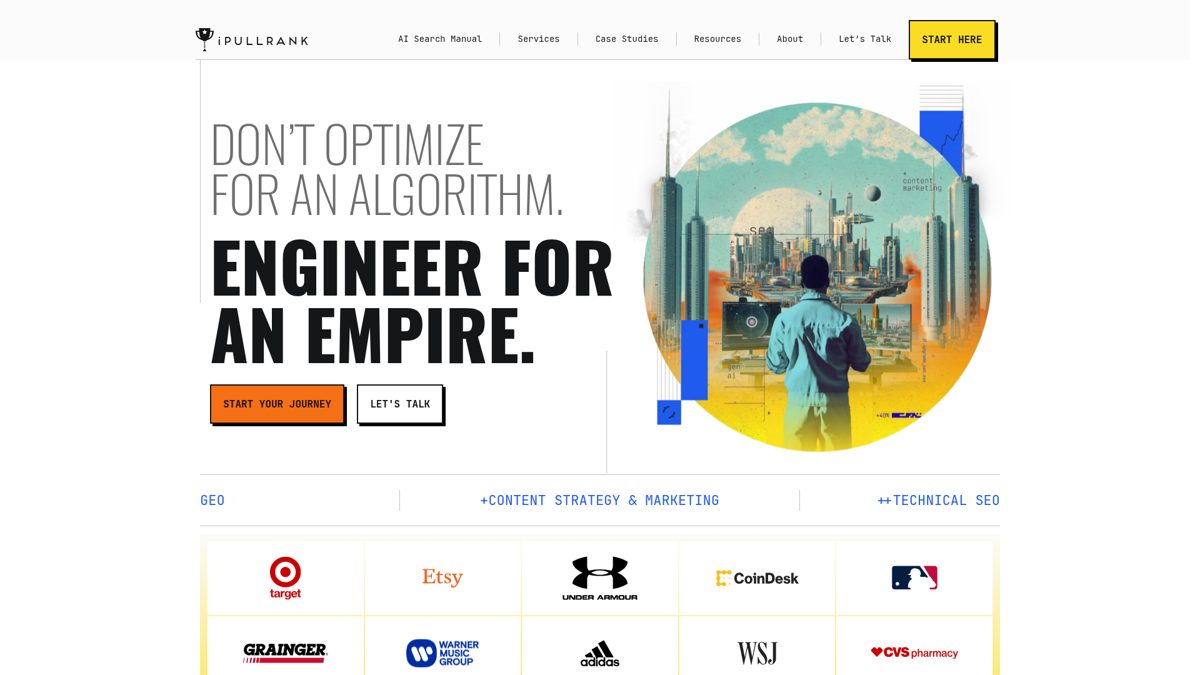
A technical shop that has published more openly than most on how retrieval and ranking machinery works under generative answers. Strongest where the bottleneck is genuinely technical — crawlability, entity disambiguation, content architecture at scale.
Single Grain
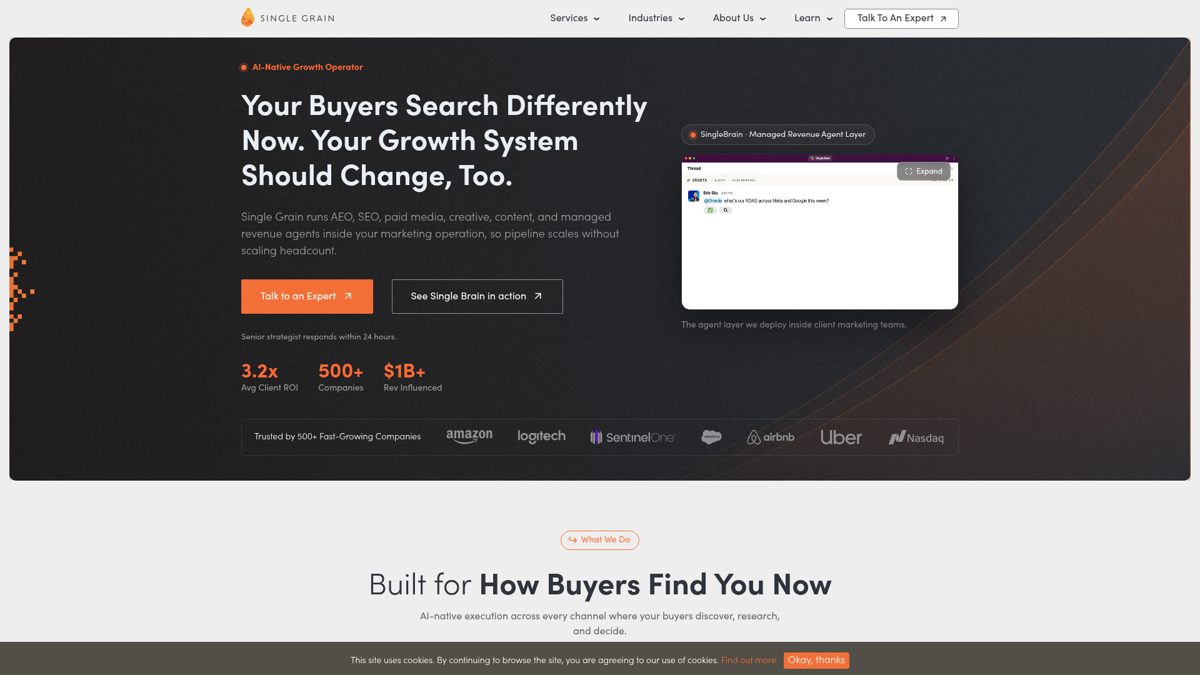
A generalist growth agency that folded AI-search work into existing SEO and paid retainers. Useful when AI visibility is one line item inside a broader demand programme; less pointed if the only problem you have is that ChatGPT names three competitors and not you.
NoGood
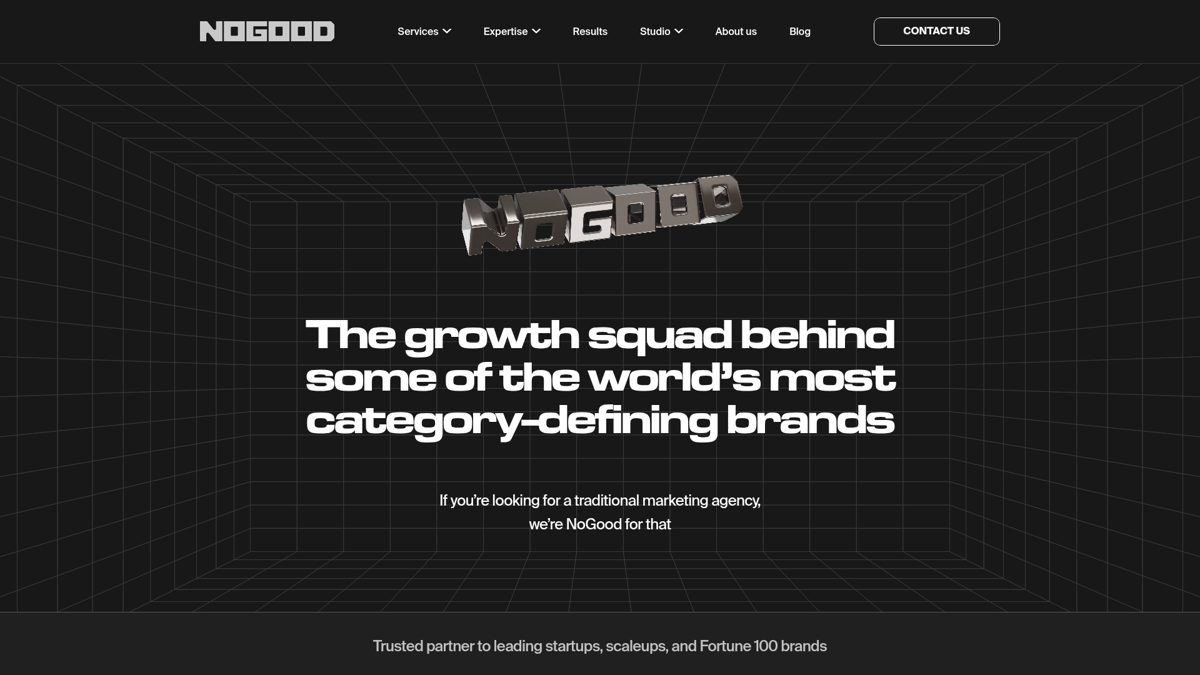
Performance-marketing origins, now running AI-visibility engagements alongside paid and content. Good fit for venture-backed teams that already measure everything; ask hard questions about how they attribute an answer-level win versus a brand-search lift.
Four questions before you sign anything
- Which stage is failing for us? Retrieval, carry-through or endorsement. A vendor who cannot answer that on the first call is selling one recipe to every client.
- Run my prompt live. Bring the sentence a real buyer would type. Watch what they do with an answer that excludes you.
- Which off-site sources will you publish on? If the answer is only your own blog, the plan cannot change what the model retrieves.
- What counts as a win, in writing? Named in which answer, on which engine, held for how many consecutive days.
LLMs recommend the brands they can identify without ambiguity, find evidence for on sources they already trust, and justify to the specific buyer described in the prompt. Fame breaks ties, but only ties. Fix your facts, earn third-party corroboration, say plainly who you are for — and judge every vendor by the answer text, not by a dashboard.
Disclosure: The News Rupt has a commercial interest in LLM Recommend (llmrecommend.com), named above. Other firms referenced neither reviewed nor sponsored this piece. Research findings are summarised from public preprints; figures are as reported by their authors and have not been independently replicated by this desk.