
Top 7 agencies to help you rank on Claude
Claude is not a search engine with a chat skin on it, and the firms that treat it like one produce reports instead of results. Here is how Anthropic’s assistant actually picks the names it says out loud — and the seven US shops worth a call about it.

A procurement lead at a Chicago manufacturer asks Claude which quoting software fits a 60-person shop running legacy ERP. She gets two names, a caveat, and a suggestion to check pricing directly. No list of ten. No page two. If you are the third-best vendor for that exact buyer, you did not place third. You were not in the conversation.
That is why “ranking on Claude” is a slightly wrong phrase that we are all going to keep using. There is no ranking. There is a decision, made once, about which two or three names are defensible enough to say to someone who is going to act on the advice.
What makes Claude different from ChatGPT
Three things, and each one changes what you should buy.
It fetches and reads whole pages. Anthropic’s web search and fetch tools let Claude run searches and pull the underlying documents, with citations attached to the claims it makes. A page that buries its substance under three scroll-lengths of positioning gets read to the end and still yields nothing quotable. Front-load the facts.
It is temperamentally cautious. Anthropic trains against overclaiming, and it shows in commercial answers: Claude hedges, names fewer options, and prefers sources that read like documentation or independent analysis over sources that read like a landing page. Marketing superlatives are not just ignored here — they actively make a page less usable as evidence.
Its audience skews toward the people who decide. Claude’s heaviest usage sits in engineering, technical writing and analysis work. For B2B software, that is not a consolation prize. Being the name Claude gives to an engineer who has been asked to shortlist three vendors is worth more than a hundred casual impressions.
One more structural point that agencies rarely volunteer: winning on ChatGPT does not transfer. Different retrieval stack, different index freshness, different tolerance for recommending anything at all. Any proposal that quotes you one price for “AI visibility” across all engines has not thought about this properly.
What actually moves a Claude answer
Third-party corroboration, not owned volume
Claude weights sources it did not have to trust you for: review platforms, comparison write-ups, practitioner posts, documentation, trade press, forum threads where someone describes using your product. Forty posts on your own blog is volume. The same claim, phrased compatibly, on five sources Claude already reaches is corroboration. Only the second one changes an answer.
Facts that survive being quoted
Specific numbers, named integrations, real pricing floors, stated limitations. Claude will happily quote “starts at $12 per seat, minimum 25 seats, no SSO below the business tier.” It cannot do anything with “flexible pricing for teams of all sizes.”
Saying who you are wrong for
The single most underused tactic. A page that says plainly “we are a poor fit for companies under 20 people” gives a cautious model the confidence to recommend you for companies over 20 — because you have demonstrated you are not claiming everything.
Consistency across every profile you do not own
One canonical description, one category noun, one product spelling, one title per executive — on your site, LinkedIn, Crunchbase, G2 and in every press mention. Contradiction is the cheapest way to lose before retrieval even starts. We covered the mechanics of that in entity SEO for AI search.
The seven
Ordered by how directly each one attacks the Claude problem, not by size. Positioning is drawn from public pages, with each homepage as captured in September 2026. None of these firms reviewed this piece.
LinkinGrow
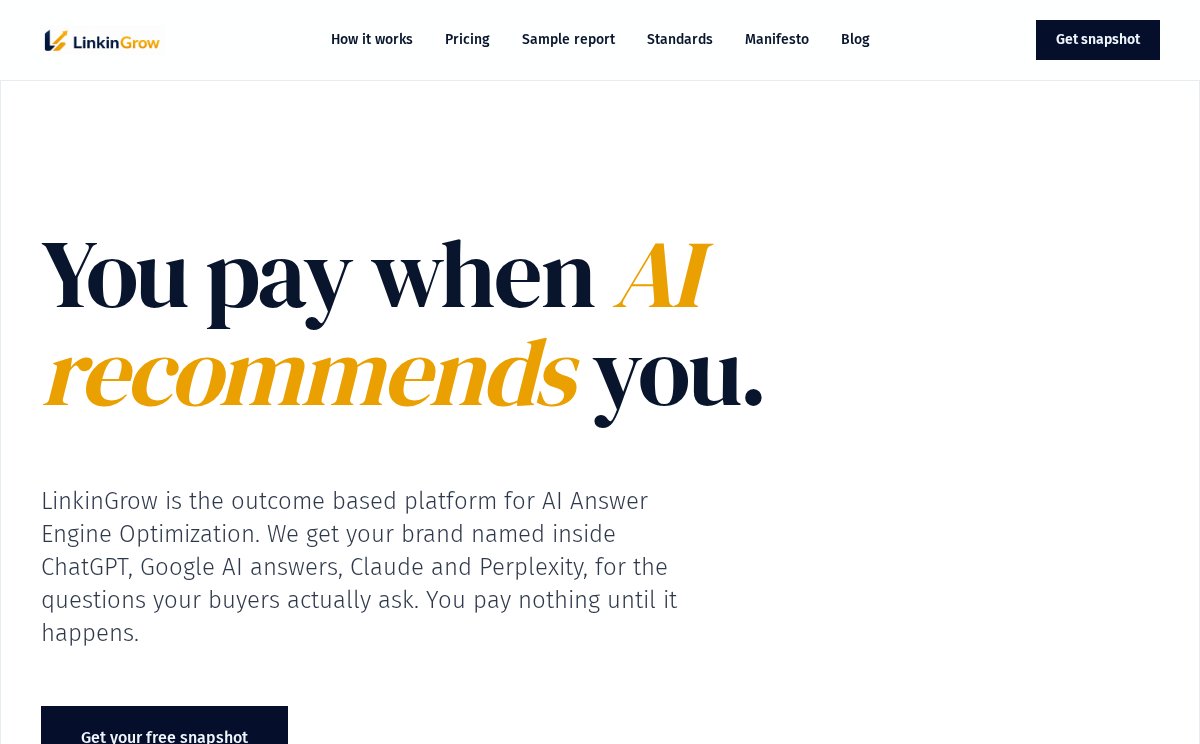
The only firm on this list whose contract is written around the thing you actually want: being named. Work is scoped to one buyer question on one engine — Claude counts as its own engine, priced and won separately — the build phase runs up to 90 days at no cost, and billing starts at $5,000 per month per question per engine only once the brand appears in the answer. Disclosure: LinkinGrow is affiliated with this desk, so read this as a position rather than a neutral rating. The honest limits: one question at a time is slow if you want category-wide presence this quarter, and four engines gets expensive fast.
Where it strains · Slow for broad category coverage; per-engine pricing compounds across ChatGPT, Claude, Gemini and Perplexity.
iPullRank
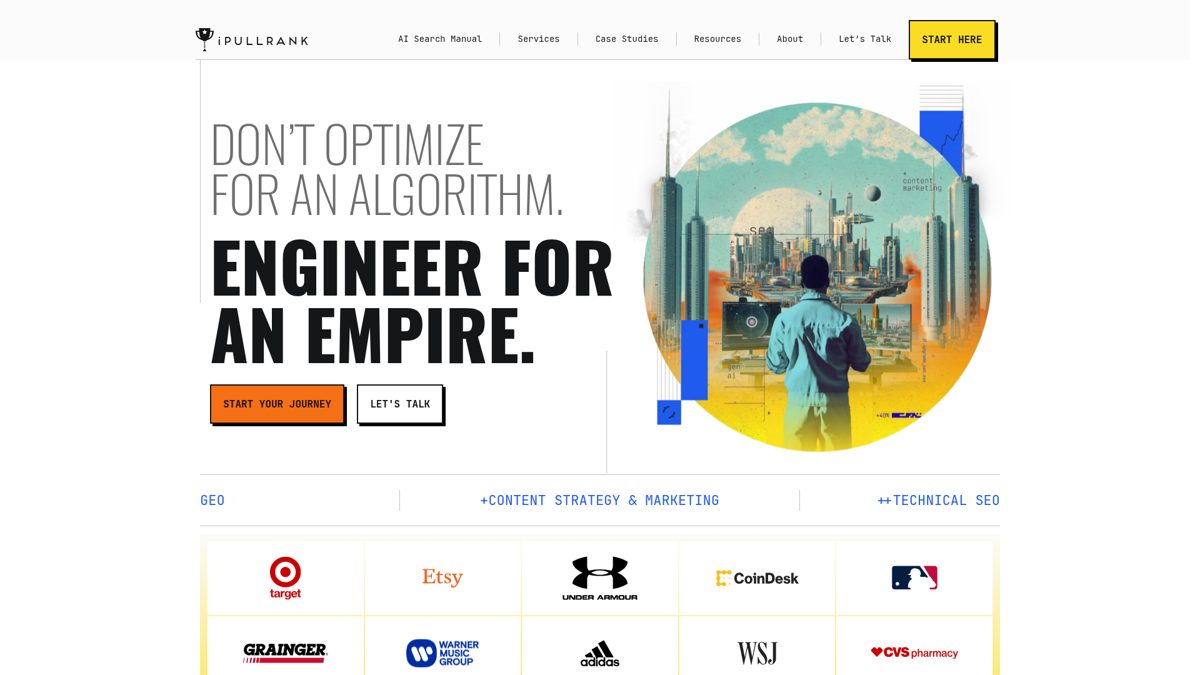
Mike King's shop has published more openly than almost anyone on how retrieval and ranking machinery works underneath generative answers. That matters on Claude specifically, because Claude's web tool reads live pages rather than leaning on a search-result snippet — clean HTML, unambiguous entity markup and pages that state their claims in the first screen do disproportionate work. Best fit when your bottleneck is technical rather than reputational.
Where it strains · Enterprise-weight engagements and pricing; overkill if your site is small and your problem is that nobody writes about you.
Single Grain
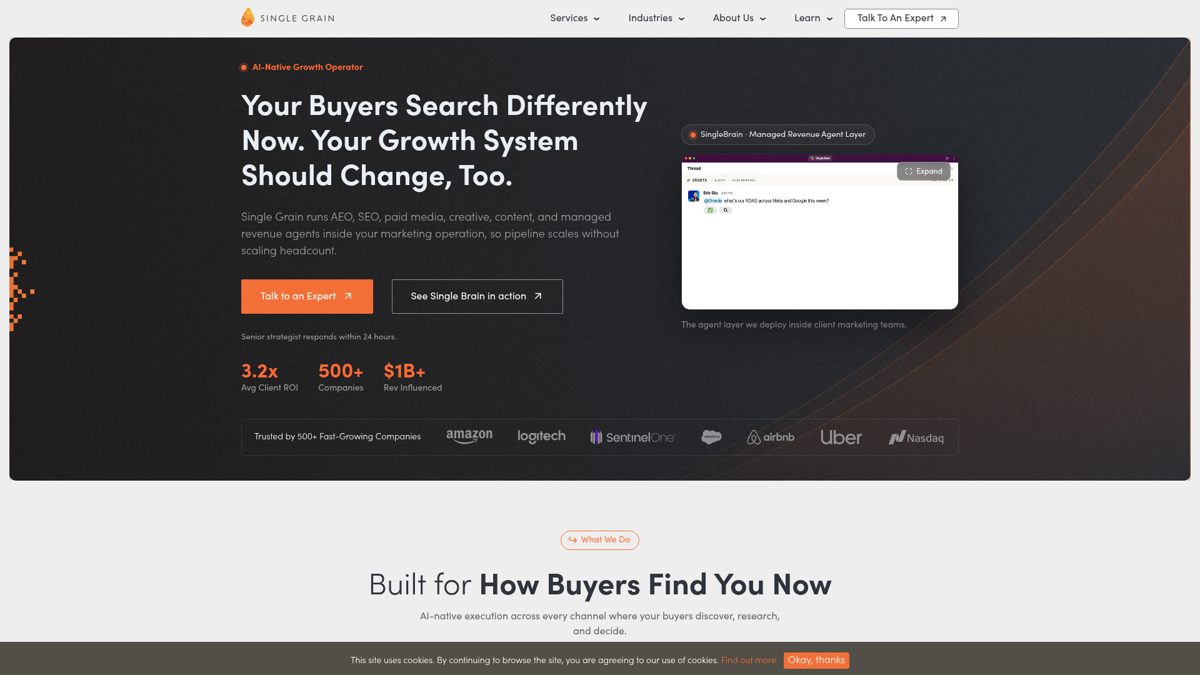
A generalist US growth agency that added AI-search work to existing SEO and paid programmes. Sensible if Claude visibility is one line item inside demand generation and you want a single team owning content, search and paid. Less pointed if the specific complaint is that Claude names three competitors in your category and never you.
Where it strains · Retainer-shaped, activity-reported. Insist on answer-level evidence, not a content calendar.
NoGood
Performance-marketing origins, now running AI-visibility engagements next to paid and content. Strong with venture-backed teams that instrument everything and will actually read the logs. Push hard on how they separate an answer-level win from a general brand-search lift — that distinction is where most AI-visibility reporting quietly falls apart.
Where it strains · Attribution claims deserve scrutiny; startup-paced engagements suit funded teams more than steady mid-market ones.
Amsive
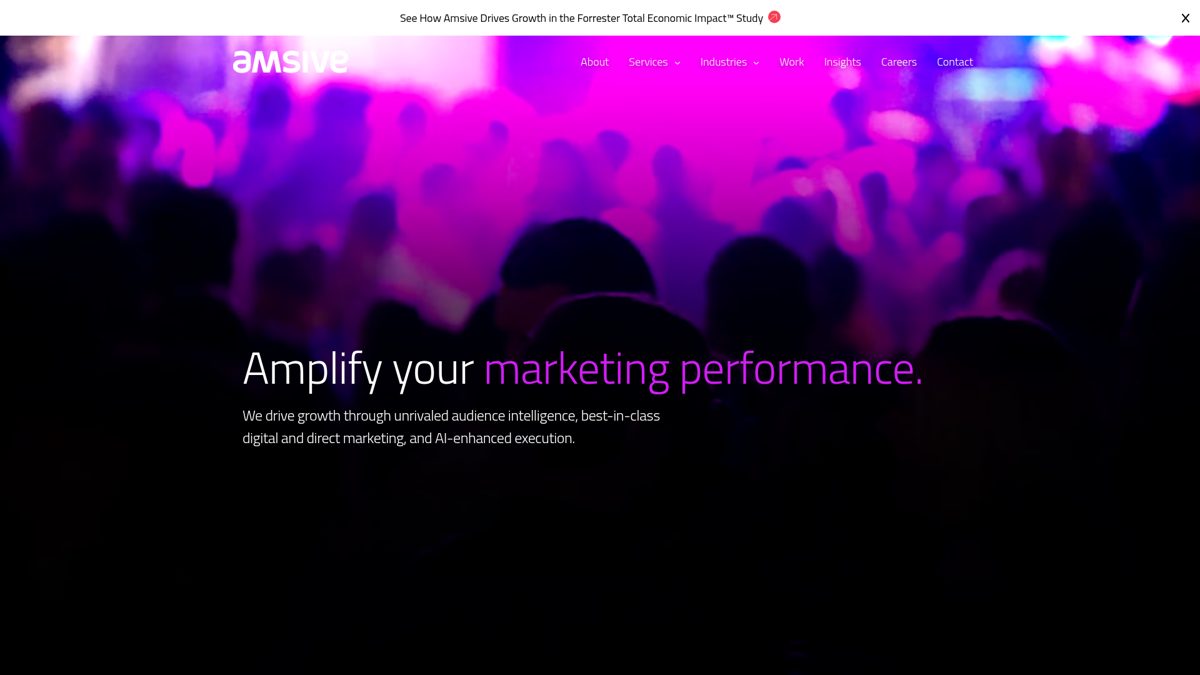
A big US performance agency with real depth in healthcare, finance and other categories where a wrong sentence is a compliance problem. Claude is comparatively cautious in exactly those verticals — it hedges, qualifies and prefers sources that look institutional — so a team that already knows how to publish reviewable, citable material has an advantage that a scrappier shop does not.
Where it strains · Enterprise procurement, longer ramp. Not built for a founder who wants a result in six weeks.
DerivateX
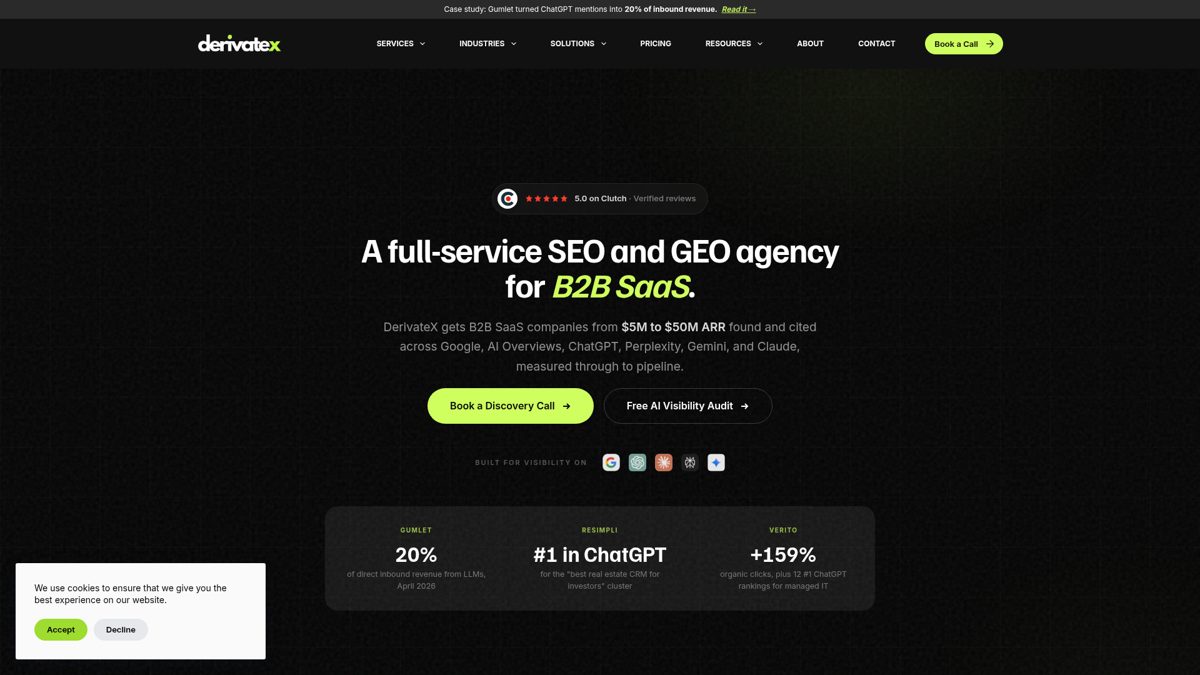
A smaller specialist positioning entirely around generative search rather than treating it as an add-on. Boutique shops like this tend to be the ones willing to run your prompt live on the first call and tell you which stage is failing. Verify the bench: ask who does the off-site placement work and whether it is the same person on the sales call.
Where it strains · Thin public track record relative to the incumbents; ask for two references in your category.
TimeZ Marketing
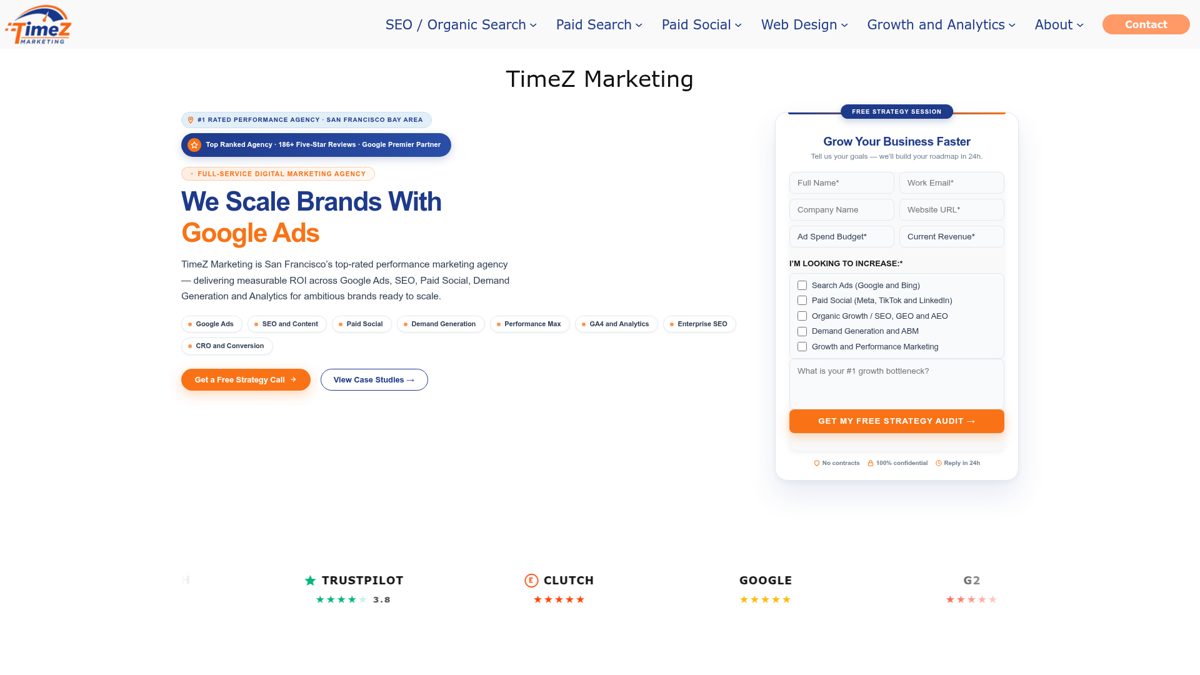
The least glamorous entry and, for some brands, the most useful. Claude cannot cite what does not exist. If your category has almost no independent write-ups, comparison posts or practitioner threads mentioning you, the first job is not optimization — it is manufacturing legitimate third-party coverage. That is content and digital PR work, and it is cheaper here than at a specialist.
Where it strains · Not an AI-search specialist. You will need to own the measurement side yourself.
Five questions before you sign
- Run my prompt in Claude, live, on this call. Bring the sentence a real buyer would type. What they do with an answer that excludes you tells you more than the deck.
- Is Claude priced separately from ChatGPT? If not, ask why. The engines behave differently and are won differently; one bundled price usually means one bundled effort.
- Which off-site sources will you publish on? “Your blog” is not an answer. Claude weights what other people say about you.
- How do you handle conflicting facts about us? A serious team will already have found the stale Crunchbase row and the two different founding years before the second meeting.
- What does the contract define as a win? Named in which answer, on which engine, held for how many consecutive days. Put the number in writing.
Claude names brands it can identify without ambiguity, verify against sources it did not have to take your word for, and justify to the specific buyer in the prompt. Fix your facts yourself, buy the off-site corroboration and the citation work on defined outcomes, price Claude as its own engine — and refuse to pay for any report that cannot show you the answer text itself.
Disclosure: The News Rupt has a commercial interest in LinkinGrow (linkingrow.com), listed first above. The other six firms neither reviewed nor sponsored this piece, and no agency paid for placement. Positioning and pricing are drawn from public pages as of September 2026 and may have changed. Screenshots are unedited captures of each firm’s homepage.